Do I Need a Fulham Loading Bay Permit for My Move?
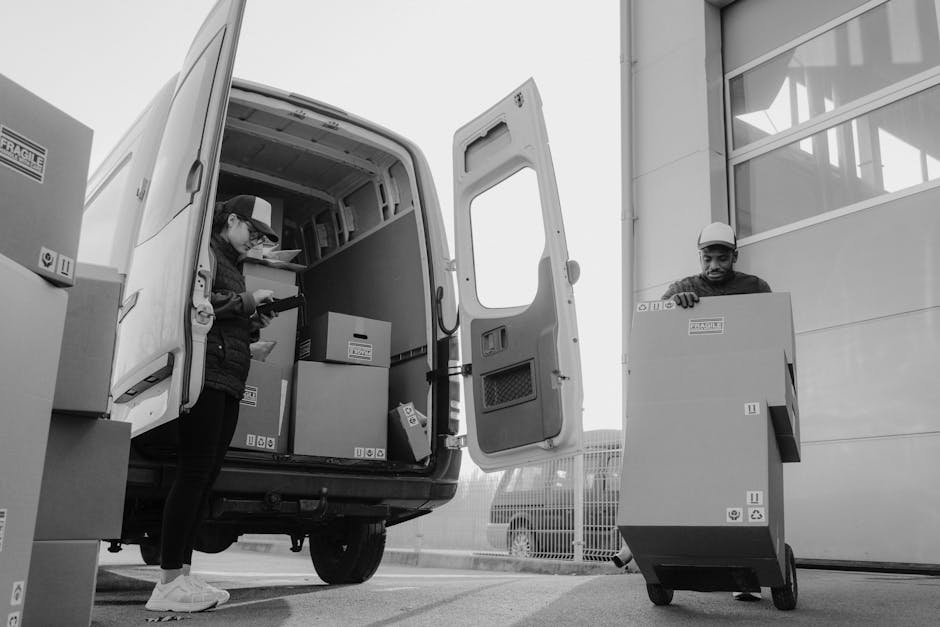
If you're planning a move in Fulham, one of the first questions you should ask is simple: do I need a Fulham loading bay permit for my move? The short answer is that you may well need some kind of parking or loading permission if your van, truck, or removals vehicle will stop in a restricted bay, on a red route, or in an area where loading is controlled. Miss that detail and the day can get messy very quickly. We're talking parking fines, delays, stressed neighbours, and a removal team trying to carry a sofa half a street away. Not ideal.
This guide explains what a loading bay permit is, why it matters, how to work out whether your move needs one, and the practical steps that help you avoid last-minute chaos. It also covers common mistakes, planning tips, and a few real-world considerations that people often forget until the van is already outside.
- Why it matters
- How loading bay permits work
- Benefits and practical advantages
- Who needs one and when it makes sense
- Step-by-step guidance
- Expert tips
- Common mistakes to avoid
- Tools, resources and recommendations
- Law, compliance and best practice
- Options and comparison
- Real-world example
- Practical checklist
- Conclusion
- Frequently asked questions
Why Do I Need a Fulham Loading Bay Permit for My Move? Matters
A loading bay permit matters because moving is rarely just about boxes. It's about access. In Fulham, access can be the difference between a smooth handover and a day where everything takes twice as long as it should. Streets can be busy, parking can be tight, and loading spaces are often shared, time-limited, or controlled.
If a van stops where it shouldn't, even briefly, there can be consequences. Sometimes it's a penalty charge. Sometimes it's a frustrated resident or delivery driver. Sometimes it's the awkward reality of carrying wardrobes, mattresses, and cartons further than planned because the vehicle has had to move on. That sounds minor on paper. On moving day, it feels huge.
For house moves, office relocations, and even smaller furniture collections, the question is less "Can the vehicle physically stop here?" and more "Is this stopping point lawful, practical, and timed correctly?" That's the real issue. If your move involves a man with van, a larger removal vehicle, or a full team handling multiple items, planning the loading location early can save a lot of needless strain.
And truth be told, most moving problems are not dramatic. They're small things stacking up: no space, no access, no time buffer, and no permit. One little missed detail can snowball into a long afternoon in the rain. Fulham has enough of those grey, drizzly days already.
How Do I Need a Fulham Loading Bay Permit for My Move? Works
Despite the clumsy wording of the question people often search, the practical idea is straightforward: you need to check whether your moving vehicle can legally load or unload at the property, and if not, whether you need permission to use a bay, suspension, or controlled space.
In local moving terms, a loading bay is a marked area designed for short-term loading and unloading. Some are unrestricted at certain times. Some are controlled by signs and time windows. Others are not suitable for a moving van at all without prior arrangement. The exact rules can vary, so the safe approach is to treat every street as unique until checked.
Here's how it usually works in practice:
- You identify the move date and the vehicle size.
- You check whether the pickup and delivery addresses have loading restrictions, timed bays, resident-only parking, yellow lines, or access limitations.
- You decide whether your vehicle can legally stop close enough for loading and unloading.
- If not, you arrange the relevant permit or permission through the proper channel before moving day.
- You keep the permit details handy for the driver and anyone helping on the day.
In a simple move, the loading window might be short. A few boxes, a small sofa, maybe some garden bits. In a bigger move, especially with a removal truck hire booking or a full household relocation, the risk of parking issues rises fast. Bigger vehicles need more space, and they are less forgiving when a street is narrow or busy.
So, do you need a permit every time? Not always. But you should never assume you don't. That's the bit people regret later.
Key Benefits and Practical Advantages
Securing the right loading arrangement does more than keep you on the right side of parking rules. It makes the whole move calmer. Which, if you've ever tried moving a bed frame through a tight hallway while watching the clock, is no small thing.
- Less walking distance: The vehicle can get closer to the property, which saves time and effort.
- Lower risk of fines or complaints: A lawful stop is far less likely to create avoidable problems.
- Better handling of heavy items: Fridges, wardrobes, and awkward furniture are much easier to manage when the truck is nearby.
- Cleaner scheduling: The crew can work to a plan instead of improvising around parking restrictions.
- Reduced stress: You're not checking mirrors every thirty seconds wondering if a warden is nearby.
There's also a less obvious benefit: permits and planned loading often help you create a more professional moving day, even if it's a small domestic job. If you're arranging a business move through commercial moves or relocating a home office, a tidy access plan can keep the rest of the schedule from slipping.
And that matters. Time lost to parking confusion tends to show up everywhere else: delayed lift bookings, late keys, tired helpers, and a move that finishes after dark. Not glamorous. Not fun.
Who This Is For and When It Makes Sense
This question isn't only for people hiring a large removals team. In fact, it comes up across a surprising range of situations. If you're moving anything more than a couple of bags, it's worth thinking about loading access early.
Typical situations where a loading bay permit or parking permission may be needed
- Flat moves in busy streets with limited kerb space
- House removals where the vehicle cannot sit on a private drive
- Office moves requiring timed access and quick turnaround
- Furniture pick-ups where large items need close vehicle access
- Moves involving larger vans or lorries that need more room to manoeuvre
If you're planning a smaller move, a simple man and van service might be enough, but even then you should still consider the bay rules at both ends of the journey. A short job can still get blocked by parking controls. It happens more often than people expect.
On the other hand, if you're using a larger vehicle or moving a whole household, the issue becomes much more important. Services like home moves or house removalists typically benefit from careful access planning because there's often more furniture, more lifting, and a stronger need to keep the vehicle close.
For office clients, the stakes are different but just as real. Staff need to get in, IT kit needs to be protected, and loading times may be limited by building rules. That's where office relocation services can be useful, because a team that understands access planning will usually ask about the loading bay before anything else. Sensible, really.
Step-by-Step Guidance
If you want to avoid last-minute surprises, use a methodical approach. It's not exciting, but it works.
1. Check both addresses separately
Start with the pickup and drop-off locations. Don't assume that because one address has easy access, the other will too. A charming second-floor flat in Fulham can have completely different loading restrictions from a house a mile away.
2. Identify the vehicle type
The size of your vehicle matters. A small van may fit where a long-wheelbase van won't. A moving truck may need more space, more time, and a clearer loading position. If you're comparing options, take a look at the practical differences between a moving truck and smaller transport choices before booking.
3. Ask what kind of access is available
Look for loading bays, resident bays, yellow lines, private forecourts, and any signs about time limits. If the building has a concierge or management office, ask them what's permitted. Sometimes the answer is simple. Sometimes it's a bit of a muddle. Welcome to moving day.
4. Allow extra time for delays
A permit may help with legal parking, but it does not create magic space on a busy street. Give yourself a buffer for traffic, a late key handover, or a driver who needs one extra turn around the block because someone has parked awkwardly. It happens.
5. Confirm who is arranging the permit
Do not leave this vague. Is it you, the building manager, or the moving company? Make it clear before the booking is final. If you're arranging a full service with packing support, the process becomes easier to coordinate. That's one reason people often pair moving with packing and unpacking services when the timeline is tight.
6. Keep proof and instructions together
Store the permit details, bay instructions, and any contact numbers in one place. A driver should not have to search through three texts and a photo album to work out where to stop. That's just a headache nobody needs.
Expert Tips for Better Results
Here's the part that tends to separate a decent move from a genuinely smooth one. These are the small things that make a real difference.
- Book access early: If you suspect the bay may be controlled, don't leave it until the week of the move.
- Use the smallest practical vehicle: Sometimes two smaller loads are easier than one oversized truck, especially on narrow streets.
- Measure awkward items: Large wardrobes, beds, and sofas can change the vehicle choice completely.
- Check lift availability: A permit helps outside; a lift booking helps inside. Both matter.
- Think about neighbours: If you're blocking access for too long, someone will notice. Better to plan for quick turnover.
One thing we often tell people is to picture the move in real time. Doors opening, items coming out, the vehicle loading, the next item arriving. If the van is too far away, every step becomes longer. If the loading bay is right, the whole day feels lighter.
Also, keep your expectations realistic. A permit does not guarantee a perfect parking spot in the exact place you imagined. Sometimes the best outcome is simply "legal and close enough." That's a win in a London street, honestly.
If you're choosing between transport options and want something straightforward, a trusted man with van arrangement can be a sensible fit for lighter moves. For larger or more complicated jobs, a fuller removals setup may be better. For either, access planning should come first.
Common Mistakes to Avoid
Most moving-day headaches come from the same few errors. The good news? They're avoidable.
- Assuming there is always a loading bay: Not every street has one, and not every bay can be used by every vehicle.
- Leaving the permit until the last minute: This is the classic mistake. The sort that looks harmless until the day itself.
- Forgetting the return journey: It's not just the old address. The new one may have restrictions too.
- Not checking vehicle height or length: A truck that physically fits the road may still be awkward to park safely.
- Ignoring building rules: Private developments can have their own loading instructions. They are not always obvious.
- Not telling the removals team: If the team doesn't know about the bay situation, they can't plan properly.
There's also a sneaky one: people often remember to arrange the moving vehicle and forget the parking detail because it feels secondary. It isn't secondary. In a place like Fulham, it can be the whole game.
Tools, Resources and Recommendations
You do not need fancy software to organise a loading bay permit situation, but a few practical tools help. A notebook works. A phone calendar works. A good old screenshot of the parking signs absolutely works.
- Property access notes: Record gate codes, concierge numbers, and any loading instructions.
- Photo check: Take pictures of street signs and bay markings so you can review them later.
- Moving inventory: Knowing how much you are moving helps you choose the right vehicle size.
- Calendar reminders: Put the permit deadline, move date, and key handover times in your diary.
- Service planning: If you need a larger vehicle or extra capacity, compare it with removal truck hire and similar options before committing.
For people moving a few bulky items rather than a full house, a quick furniture pick up service can be a practical alternative. That said, even a small collection can need careful loading access if it's on a narrow Fulham street with limited stopping space.
It may also help to compare your moving setup against your budget and timing. If you're not sure whether the job needs a larger team, start by reviewing pricing and quotes so you can balance cost against convenience. Cheap is not always cheap if you end up paying for delays or rebooking.
Law, Compliance, Standards, or Best Practice
Because parking and loading are controlled activities in many London streets, it's sensible to approach this as a compliance issue rather than a guess. The exact rules can vary by location, bay type, time of day, and vehicle class. So while the broad principle is easy to understand, the details need checking before the move.
Best practice usually means this:
- Do not park in a restricted bay unless it is explicitly allowed for your type of loading activity.
- Do not rely on verbal assumptions from neighbours or passers-by.
- Do not treat the loading bay as a "best effort" space if it has time or vehicle restrictions.
- Keep any permission, booking confirmation, or permit information accessible on the day.
If your move involves business equipment, commercial stock, or repeated deliveries, the compliance side becomes even more important. Good operators treat access rules as part of the job, not an afterthought. You'll notice that in the way the move is planned: clearer timing, better communication, fewer surprises.
It is also sensible to choose a company that takes safety seriously. A well-run move usually goes hand in hand with documented process, careful handling, and clear terms. If that matters to you, have a look at the site's insurance and safety information and the health and safety policy before you book. Those pages are not glamorous, but they tell you a lot about how a provider thinks.
Options, Methods, or Comparison Table
When people ask whether they need a Fulham loading bay permit, they are often really choosing between three approaches. Each has its place.
| Option | Best for | Pros | Watch-outs |
|---|---|---|---|
| Use an existing legal loading bay | Short, simple moves with clear bay access | Convenient, efficient, often the least disruptive | May be time-limited or unavailable at busy times |
| Arrange a permit or permission in advance | Moves in controlled streets or near restricted parking | More certainty, lower risk of penalties, better planning | Requires lead time and accurate information |
| Use off-street or private access | Properties with drives, courtyards, or managed access | Often the smoothest option if available | Not everyone has it, and turning space can still be tight |
In real life, the "best" choice depends on the property and the vehicle. A family move with multiple rooms of furniture usually needs more planning than a single-item collection. Likewise, an office relocation with IT equipment and desks needs a different rhythm from a weekend flat move.
If you are unsure which moving method fits your situation, a quick conversation with a specialist can help. The right setup is not always the biggest one. Sometimes it's just the smartest one.
Case Study or Real-World Example
Here's a common Fulham-style scenario. A couple is moving out of a first-floor flat on a street with narrow kerbs and busy daytime traffic. They book a vehicle for the morning and assume it can stop outside the building. On the day, the van arrives, but the nearest legal stopping point is farther away than expected. The team can still do the move, but now every box has to be carried an extra distance, and the bigger furniture takes longer to manoeuvre.
Nothing catastrophic happened. But the move became slower, noisier, and more tiring than it needed to be. Everyone felt it. The removals crew, the couple, even the neighbour who had to wait while a mattress was turned sideways in the hallway. A loading bay arrangement, sorted earlier, would have reduced the whole chain of hassle.
Now compare that with a better-planned version. The access was checked ahead of time, the right vehicle was chosen, and the loading point was confirmed before the move. Result? Less carrying, fewer interruptions, and a calmer handover. The moving day still had the usual little surprises - there is always one box that's packed oddly - but the access itself was not one of them.
That's the real value here. A permit or access plan does not make moving beautiful. It just stops avoidable friction from getting in the way.
Practical Checklist
Use this checklist a few days before your move. It's basic, but it catches a lot of problems.
- Confirm the moving date and time window
- Check the pickup and delivery street parking rules
- Identify whether a loading bay, permit, or special permission is needed
- Confirm vehicle size and make sure it suits the access
- Tell your mover about any restrictions, gates, lifts, or narrow entrances
- Keep any permit or access confirmation ready on your phone
- Pack items so the load can be unloaded quickly
- Leave a buffer for delays, traffic, or building access issues
- Check whether fragile items need extra handling or wrapping
- Make sure keys, contacts, and instructions are easy to find on the day
A good checklist saves you from the "Oh, we should have checked that" moment. Those moments are charming in hindsight. Less so at 8:15 in the morning with a trolley full of boxes waiting at the kerb.
Get a free quote today and see how much you can save.
Conclusion
So, do you need a Fulham loading bay permit for your move? Sometimes yes, sometimes no - but the sensible move is to check early and plan as if access will be tight until proven otherwise. That approach keeps you safer, reduces delays, and helps your move feel much more controlled.
If your street has controlled parking, limited loading space, or a larger vehicle is involved, permit planning should be near the top of your list. Even a smaller move can benefit from the same discipline. In a busy part of London, good access planning is not overkill. It is the difference between a steady day and a scramble.
If you want the move to feel calmer from the start, pair careful planning with a reliable moving team and clear access instructions. Simple, really. Well, simple once it's written down.
And when the last box is finally inside and the van door shuts with that satisfying metal clunk, you'll be glad you handled the parking side properly.
Frequently Asked Questions
Do I need a Fulham loading bay permit for every move?
No, not every move needs one. It depends on the street, the type of vehicle, the time of day, and whether there is legal loading access outside the property. Always check the exact location rather than assuming.
What happens if I park in a loading bay without permission?
You could receive a parking penalty, create access issues, or delay the move. Even if you only stop briefly, restricted bays are still controlled, so it is not worth gambling on it.
Can a man and van job in Fulham still need a permit?
Yes. Smaller vehicles are not automatically exempt from parking rules. A man and van service may still need proper loading access, especially in busy or restricted streets.
Is a loading bay permit the same as a parking permit?
Not always. A loading bay arrangement is usually about temporary access for loading and unloading, while parking permissions can cover different situations. The names and rules can overlap, so check the specific wording carefully.
Who usually arranges the permit: me or the moving company?
It depends on the provider and the arrangement you have agreed. Some clients handle it themselves, while others ask the mover to help coordinate. The key is to confirm responsibility early so nothing is left unclear.
How far in advance should I check loading bay rules?
As early as possible, ideally once your move date is set. The earlier you check, the more time you have to deal with building rules, permit lead times, or any changes to vehicle size.
What if my new place has better access than my old one?
That helps, but it does not remove the need to check the pickup side. The whole move is only as smooth as the trickiest address. One awkward kerb can change the plan.
Do larger vehicles need more careful planning in Fulham?
Yes, generally they do. A bigger van or truck can be harder to position legally and safely, which makes loading bay planning more important. If needed, compare it with moving truck or removal truck hire options before booking.
Can I use a loading bay for furniture collections too?
Often yes, if the bay rules allow it and the loading activity is lawful for the vehicle type and time window. This is especially relevant for larger items collected through furniture pick up arrangements.
Does having a permit mean I can take as long as I want?
No. Most loading permissions are time-based and purpose-based. Even when access is arranged, you should load efficiently and stay within the conditions of the permission or bay rules.
What if I'm moving a whole house or office?
Then access planning becomes even more important. For larger jobs, services like home moves, house removalists, and office relocation services are often easier to coordinate when loading space has been checked in advance.
How do I make the process less stressful?
Keep the access details simple, confirm the vehicle size, give yourself a buffer, and make sure everyone involved knows the plan. A little structure goes a long way. It really does.